Gadgets and audio through Kakobuy, with the power left off
Earbuds, consoles, chargers and phone cases are checked for appearance and missing parts. Function, quality and authenticity are left to you and the seller.
No power button pressed at the warehouse
Kakobuy's disclaimer article, help 48, has a clause headed "Can't be professionally inspected". It names electric equipment, branded items, tickets and cards, and says the inspector "can only check whether the items' appearance is in sound condition or accessories complete, but can't turn on the equipment to check the quality."
Read that slowly, because it is more specific than most agents get. Two checks do happen: the outside looks undamaged, and the accessories that should be in the box are there. One check does not: nobody presses the power button. For a pair of wireless earbuds, that means a worker can confirm two buds, a case and a cable are present. Whether the buds pair, hold a charge or play sound evenly is unknown until they reach you.
The practical effect is that the warehouse photo of a gadget tells you about completeness, not function. A handheld console photographed in its box with all its parts looks the same whether the screen lights up or not. That is a planning problem for the day you order, not the day it arrives.

Electronics sit outside the authenticity and function check
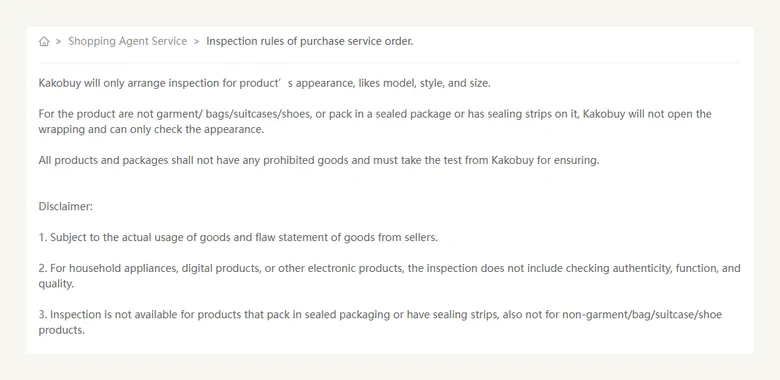
The inspection article itself, help 89, closes with a disclaimer list. Its second point reads: "For household appliances, digital products, or other electronic products, the inspection does not include checking authenticity, function, and quality."
The international transit article, help 95, says the same in other words for parcels you send into the warehouse yourself: "Electric appliances, digital products, peripheral products, or other functional products' quality, model, accessories, etc are also not included in the inspection service." Note the word "model" there. For a parcel you forwarded, Kakobuy does not even confirm that the model number matches what you ordered.
So there are three things the warehouse will not vouch for on a gadget: that it is genuine, that it works, and that it is good. Those are exactly the things that make a gadget worth buying. That is why our finder leaves out gadget listings that carry a big brand name, and why the questions at the bottom of this page go to the seller, not to Kakobuy.
Loose batteries may be taken out at the warehouse
The first clause of help 48 is headed "Sensitive products". It lists essential oil, care solution, lubricants, batteries and glue, and says: "to guarantee your delivery, we will take them out for you."
The clause does not say whether that covers a battery built into a device, or only batteries packed loose in the box. A remote-control car that ships with a pack of AA cells, or a game player with a spare battery in the carton, is the case it most plainly describes. If the spare matters to you, buy it locally.
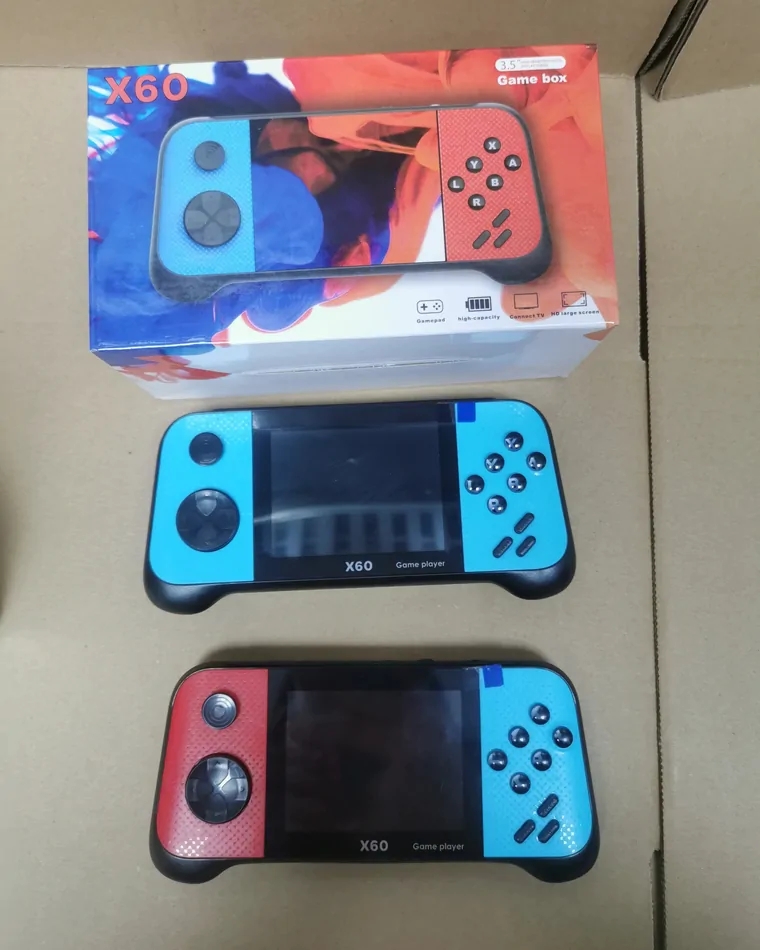
The X60 game player in our finder is a useful example of what to look for. Its listing photo shows the retail box, and the box carries four small icons: gamepad, a battery marked "high-capacity", "Connect TV" and "HD large screen", plus a 3.5-inch label. That is enough to know there is a battery inside, and that the screen is the part to worry about in transit. It does not tell you whether the battery is removable. Ask the seller.
Line names that mention batteries, and a card that disagrees with itself
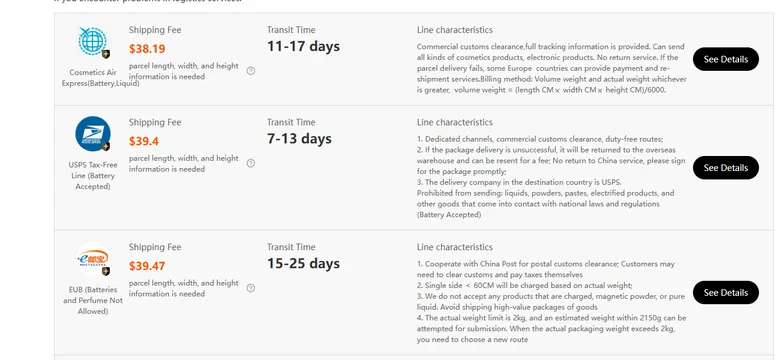
Kakobuy's shipping estimator puts battery rules into the line names. Asked about one kilogram of Ordinary goods for the United States on November 10, 2026, it offered 13 lines, among them "UPS Duty-Free (No Batteries)", two whose names end in "-electrified", "EUB (Batteries and Perfume Not Allowed)" and, last of the battery names, "USPS Tax-Free Line (Battery Accepted)". The EUB card adds: "We do not accept any products that are charged, magnetic powder, or pure liquid."
Here is the odd part. The card for "USPS Tax-Free Line (Battery Accepted)" carries the same note as the plain USPS line: "Prohibited from sending: liquids, powders, pastes, electrified products, and other goods that come into contact with national laws and regulations." Then it ends with "(Battery Accepted)". Both statements sit on one card. We cannot tell you which one the warehouse applies, and we will not guess. Ask customer service before you choose that line for a gadget.
A second contradiction runs between the estimator and the help centre. Help 44, the international transport risk warning, lists batteries with powders, liquids and precious metals as products "prohibited from export" that "cannot pass customs inspection". The estimator meanwhile offers lines named for accepting them. Both are Kakobuy's own words.
Two UPS battery lines greyed out at one kilogram
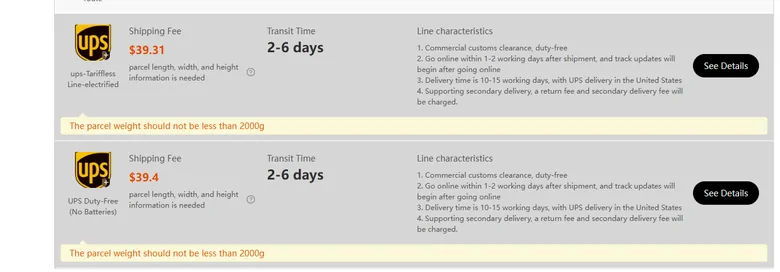
At the bottom of the same estimator page, the two UPS lines with battery words in their names, "ups-Tariffless Line-electrified" and "UPS Duty-Free (No Batteries)", were greyed out. A note under each read: "The parcel weight should not be less than 2000g."
That matters for gadgets because they are usually light. A pair of earbuds and a phone case will not reach two kilograms on their own. If the electrified UPS line is the one you want, the parcel needs other things in it, or you choose from the lines that are open at your weight. The estimator shows this before you submit, so run it with your real weight.
Line lists, prices and limits change. The reading above is from one night and one destination. Read the notes on the card you choose, every time.
Returns: the access-permit sticker and water damage
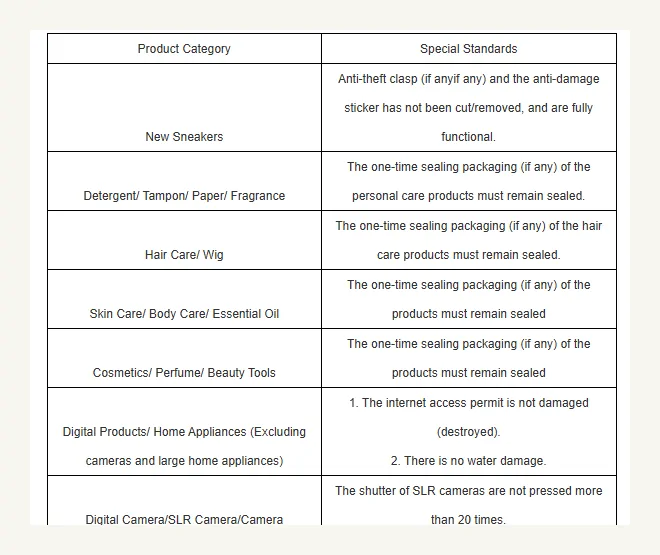
Kakobuy's return and exchange article, help 51, ends with a "Special Standards" table. A product that breaks one of these standards cannot be returned or exchanged. The entry for "Digital Products/ Home Appliances (Excluding cameras and large home appliances)" sets two conditions: "The internet access permit is not damaged (destroyed)" and "There is no water damage."
The internet access permit is the small certification sticker that phones and some connected devices sold in China carry. If you peel it or damage it while testing, the item may no longer qualify. Cameras have their own entry: an SLR is returnable only with its shutter count under the 20 presses help 51 allows.
The return window itself is short. Help 51 allows five days, counted in hours: 120 of them, starting on the first full hour once the order reads "Stocked in". For a gadget that the warehouse cannot test, that window mostly helps when the photo shows something wrong with the outside: a cracked case, a missing part, the wrong color.
Five questions for a gadget seller, with the Chinese to paste
Since the warehouse will not test the item, the seller is the only person who can tell you how it behaves. Before an order exists, Kakobuy's live chat (9am to 6:30pm BST, Monday to Friday) is the route for a question; once you have ordered, the order page has a Message link beside each item, visible in Kakobuy's own video at 1:10. Short, specific questions in Chinese get clearer answers. These are the ones we would send for a gadget:
- Is the battery built in or removable, and what capacity is it? (电池是内置的吗?容量多少?)
- What charging port does it use, and is a cable in the box? (什么充电口?带线吗?)
- Is this the version in the main photo, or a different one? (和主图是同一款吗?)
- Do you test each unit before shipping? (发货前会测试吗?)
- Which language is the menu or manual in? (菜单是英文吗?)
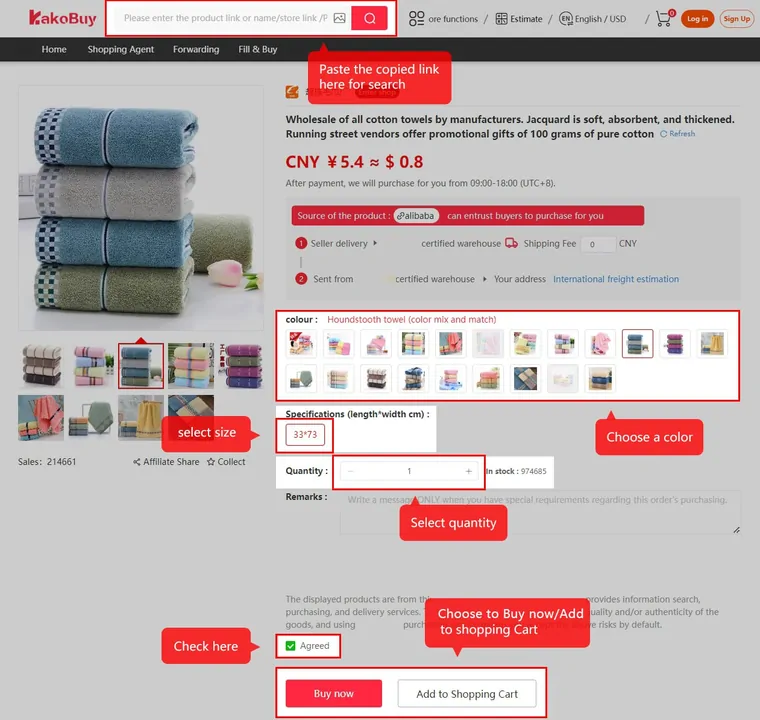
Keep the answers. If the item arrives dead, a seller who wrote that every unit is tested before shipping is easier to deal with through Kakobuy than one who never said anything. The product page frame below, from Kakobuy's tutorial, shows where the version choices sit on a listing.